Towering at 2,381 meters above sea level, the Santa Ana Volcano, ancestrally known as Cerro Ilamatepec (which in Náhuat means “Hill of the Mother” or “Hill of the Grandmother”), is the highest volcano in El Salvador. It is not just a mountain; it is a silent guardian of the region’s history and geology.
Historical Overview
Pre-Columbian Era: For indigenous cultures, primarily the Pipils, Ilamatepec was a sacred mountain, a place of worship and respect, a deity of the earth and fertility.
Volcanic History: It is an active stratovolcano. Its most violent eruption on record occurred in 1920, which was preceded by a strong seismic swarm and caused great destruction. Its last eruption was in 2005, spewing ash, rocks, and a column of smoke visible from miles away. This event reminded everyone of its latent power.
Conservation: In 1989, it was established as a central part of Los Volcanes National Park, alongside the Izalco and Cerro Verde volcanoes, to protect its invaluable ecosystem.
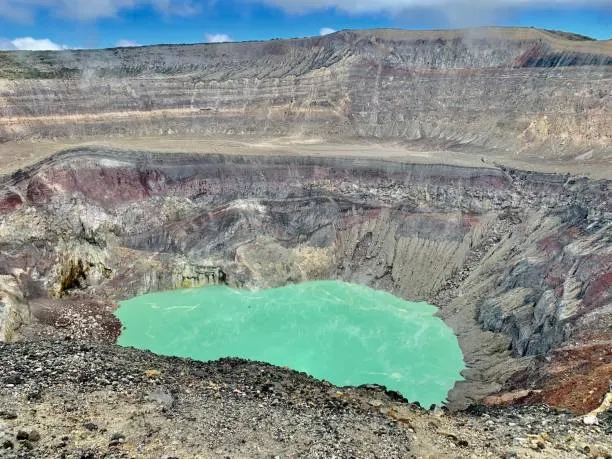
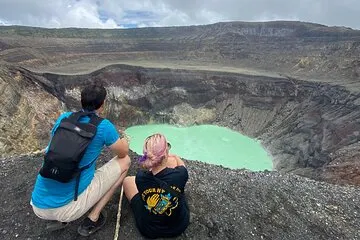
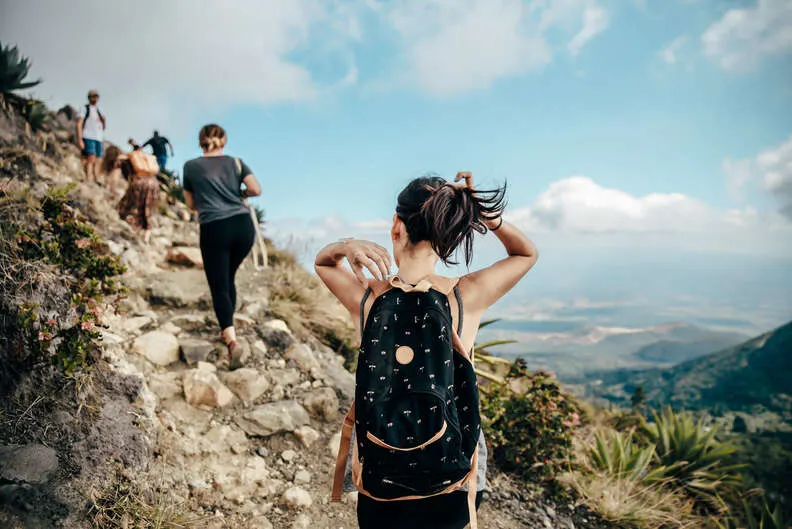
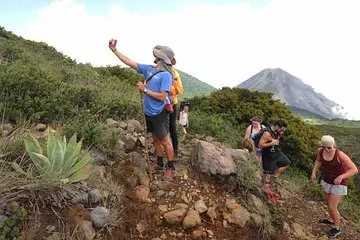
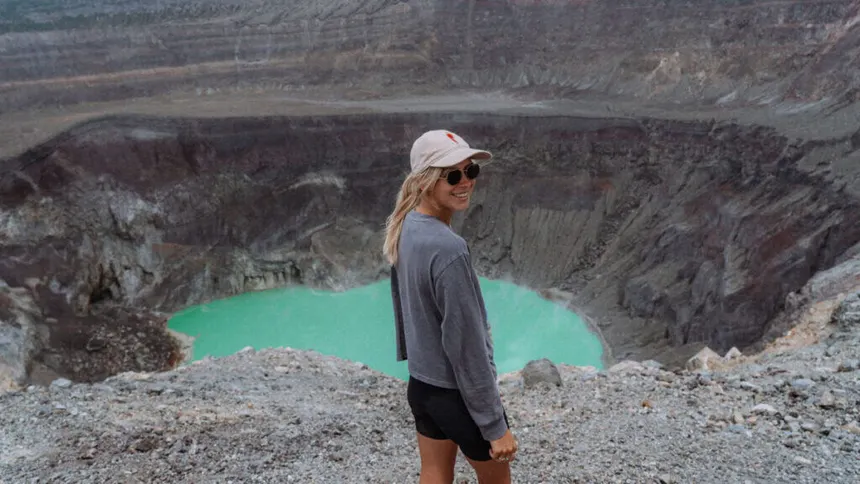
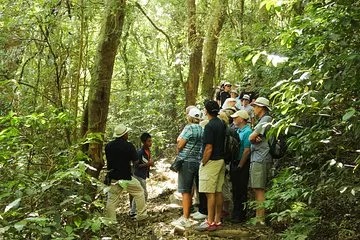
Nature: The hike is a journey through four distinct ecosystems. It begins in a coffee plantation, passes through a lush cloud forest where trees are covered in moss and orchids, and culminates in a lunar landscape of volcanic rocks and fumaroles. The final reward is peering into its crater, where you can see an incredible sulphurous green lagoon—a unique spectacle.
Main Activity: Hiking and Mountaineering.
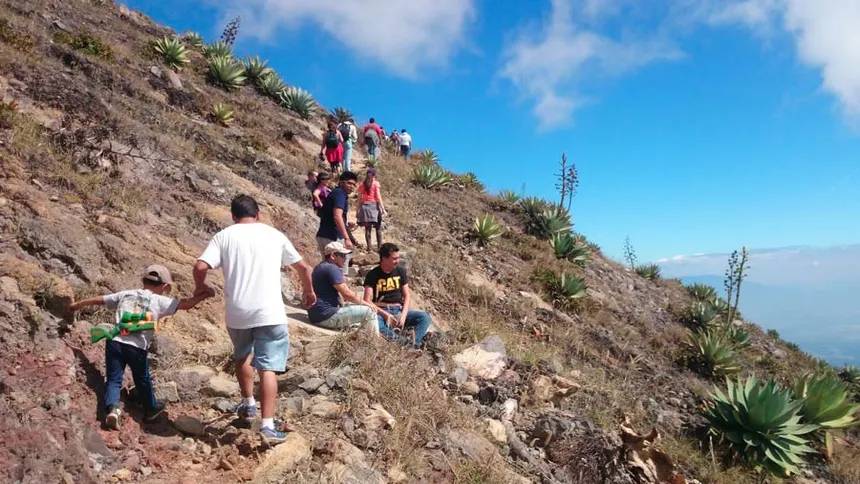
The Route: The ascent is of moderate-high difficulty. It takes approximately 4-5 hours round trip (about 8 km total). Decent physical fitness and acclimatization are required.
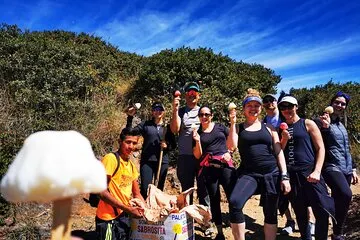
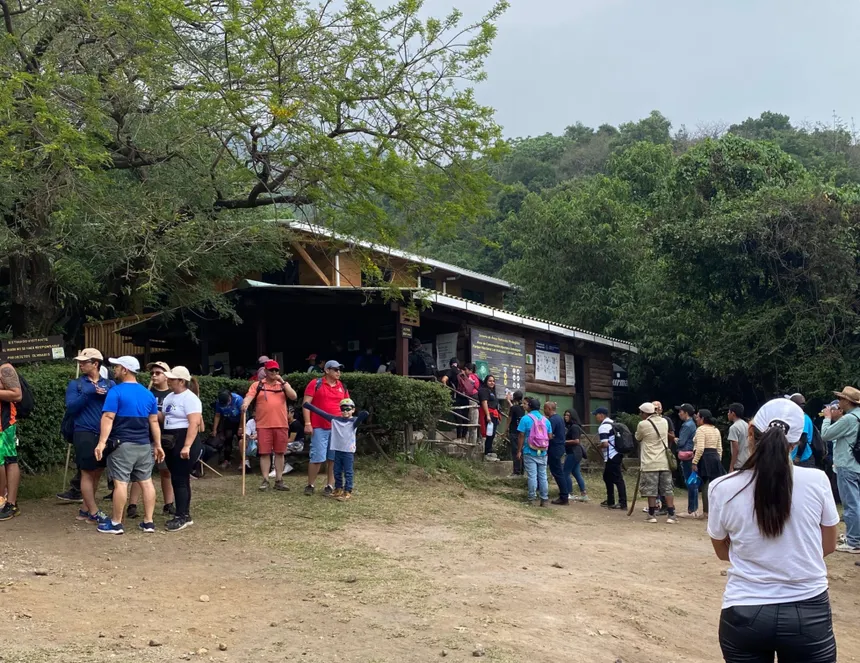
Mandatory Guide: For safety and conservation reasons, it is mandatory to hire a local guide at the park’s control post. They know the path, provide security, and share fascinating stories.
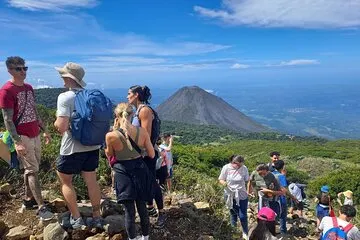
The Viewpoint: From the summit on a clear day, the views are simply panoramic: you can see the entire Coatepeque Lake, the Izalco Volcano, Cerro Verde, and, in the distance, the Pacific Ocean.
Prices (Approximate – subject to change):
Entrance fee for foreigners: $6.00 USD.
Guide fee: It varies but is usually around $5-$10 USD per person in a group. It’s important to negotiate and agree on the price beforehand.
Parking: A small symbolic fee.
Food:
Bringing your own water and snacks (fruit, energy bars) is essential. There is no food sold on the trail.
At the end of the trail, in the town of San Blas, there are small pupuserías and eateries where you can try typical local food.
Relevant Information:
Schedule: Start the hike early (7:00 – 8:00 AM) to avoid the midday heat and ensure clear skies at the summit.
What to bring: Hiking shoes or sneakers with good grip, sunscreen, sunglasses, a hat, a light jacket (it gets cold at the summit), and enough water (at least 2 liters per person).
Safety: Always follow your guide’s instructions. The weather can change quickly.